








maintenance advice
Advice on keeping your timepiece in good working order
Water resistance:
After each immersion in seawater, it is advisable to rinse your watch and its bracelet carefully with fresh water. To ensure a perfect seal, be careful not to handle the pushers underwater and that the crown is completely screwed in or in the neutral position before immersion. As seals have a limited lifespan, we recommend that you do not keep your watch in the shower: hot water can accelerate the wear of the seals. We recommend that you have your watch checked for water resistance every two years at a Bell & Ross repair center or by a Bell & Ross approved watchmaker. If you live in an area with a particularly humid climate, we recommend more frequent checks every year.
Shocks:
Although equipped with efficient devices to absorb shocks, watch movements are no less delicate. Consequently, it is recommended to avoid wearing your watch when practicing activities requiring intense, rapid and jerky movements which could, through repeated jolts, modify the setting or even damage one or more components of the mechanism.
Magnetism:
Magnetism affects precision and disrupts the proper functioning of watch mechanisms, generally causing a large advance. It is common to magnetize your watch by accident and as a precaution, in order to avoid any disturbance linked to this phenomenon, we recommend that you avoid any prolonged exposure of your watch near objects emitting strong magnetic fields such as connected devices (mobile phone, tablet, etc.), household appliances (microwave, refrigerator, induction hob, etc.), as well as security gates, speakers, metal jewelry, etc.
Températures:
The proper functioning of the mechanism of your watch is guaranteed between -20 ° C and 60 ° C. Above these temperatures, your watch will become less precise. We also recommend that you avoid thermal shock which can damage the glass of your watch until it shatters. Also, prolonged exposure to the sun can alter the color rendering of your watch (discoloration of the dial, hands and bracelet).
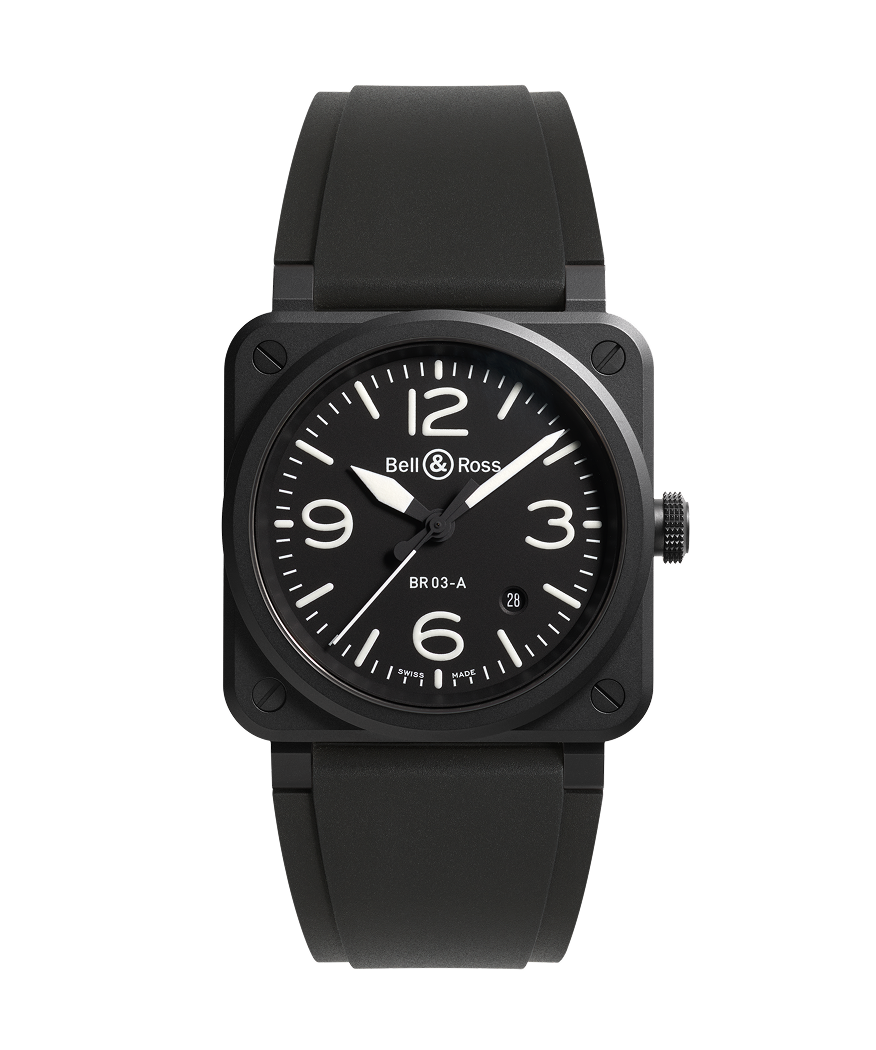
AUTOMATIC WATCHES
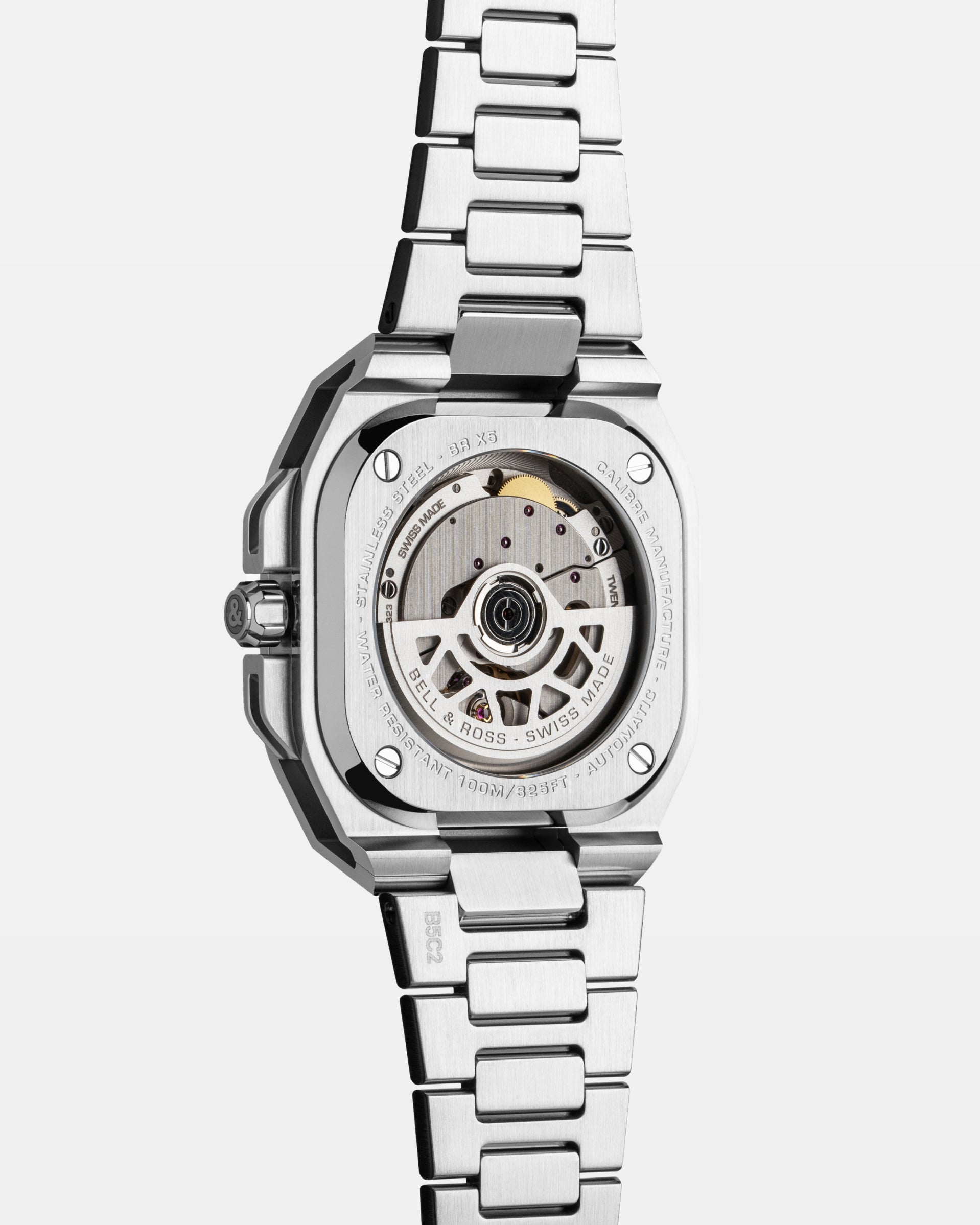
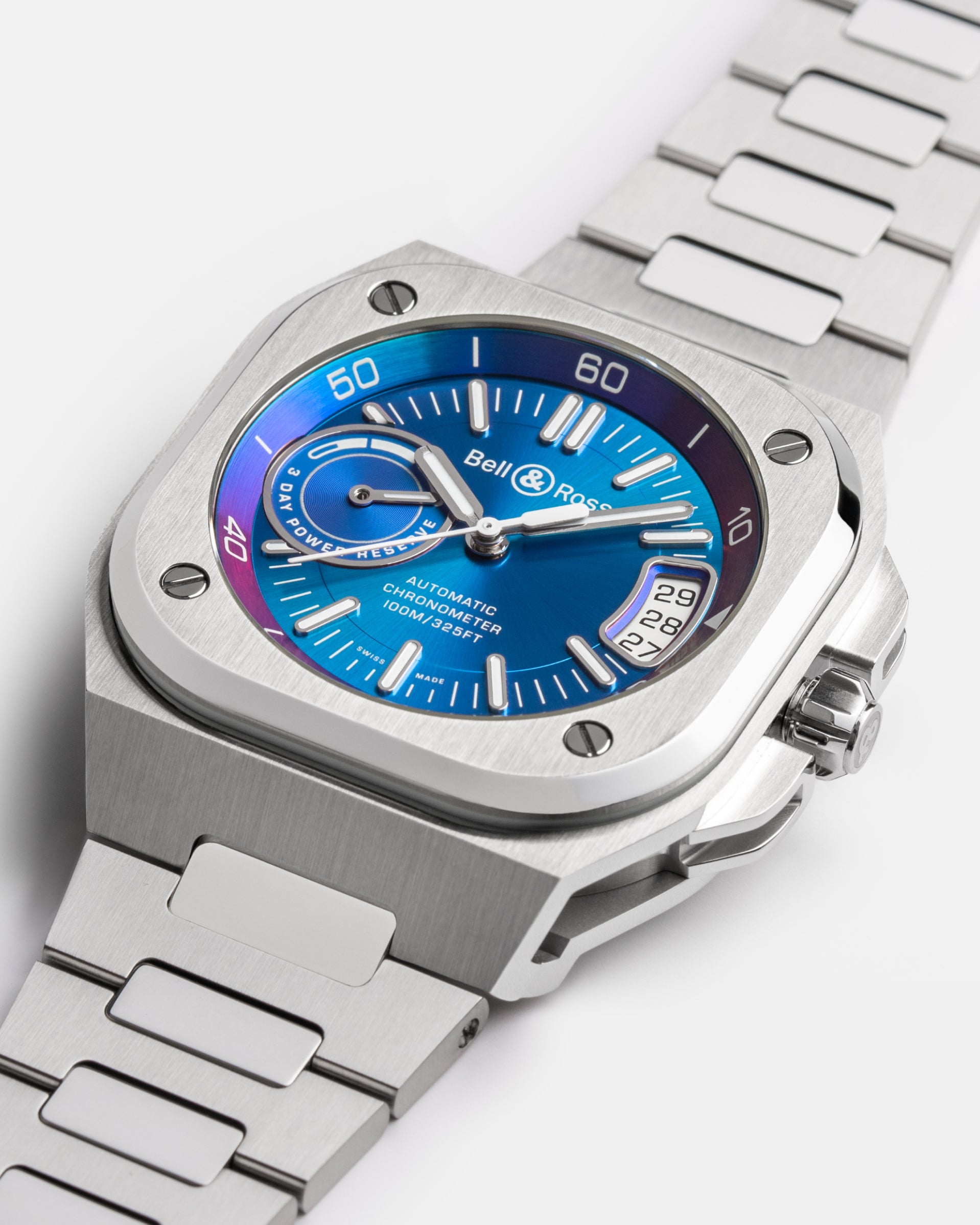
Self-winding watches are wound by movement of the wrist. In order to keep the system operating optimally, we recommend that you manually wind your watch after prolonged immobilization or when it is stopped (refer to the technical manual).
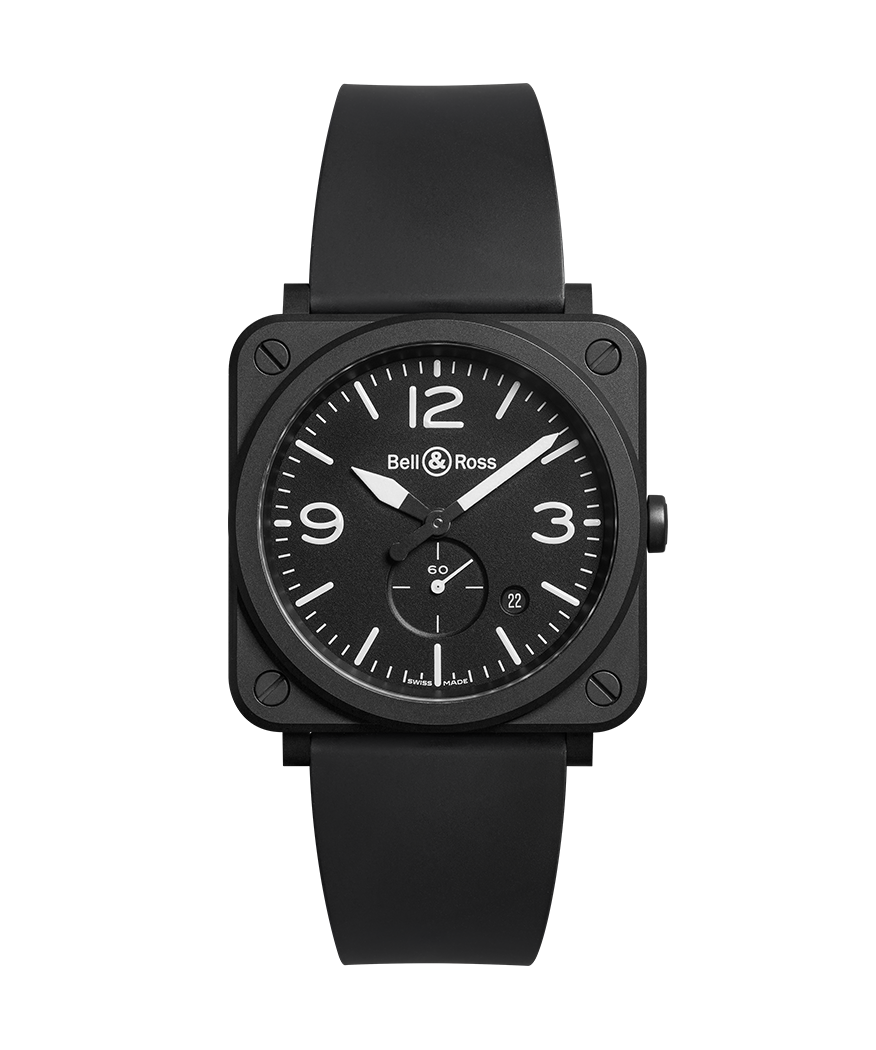
QUARTZ WATCHES
The operation of a quartz watch is ensured by an integrated circuit, which transmits energy from the battery, through the quartz oscillator, which then performs the division of time. When your quartz watch is stopped, It is important to have the used battery replaced as soon as possible. This will prevent it from flowing and irreversibly damaging the movement. Battery replacement must be carried out by a Bell & Ross repair center or a Bell & Ross approved watchmaker in order to guarantee perfect water resistance.
